

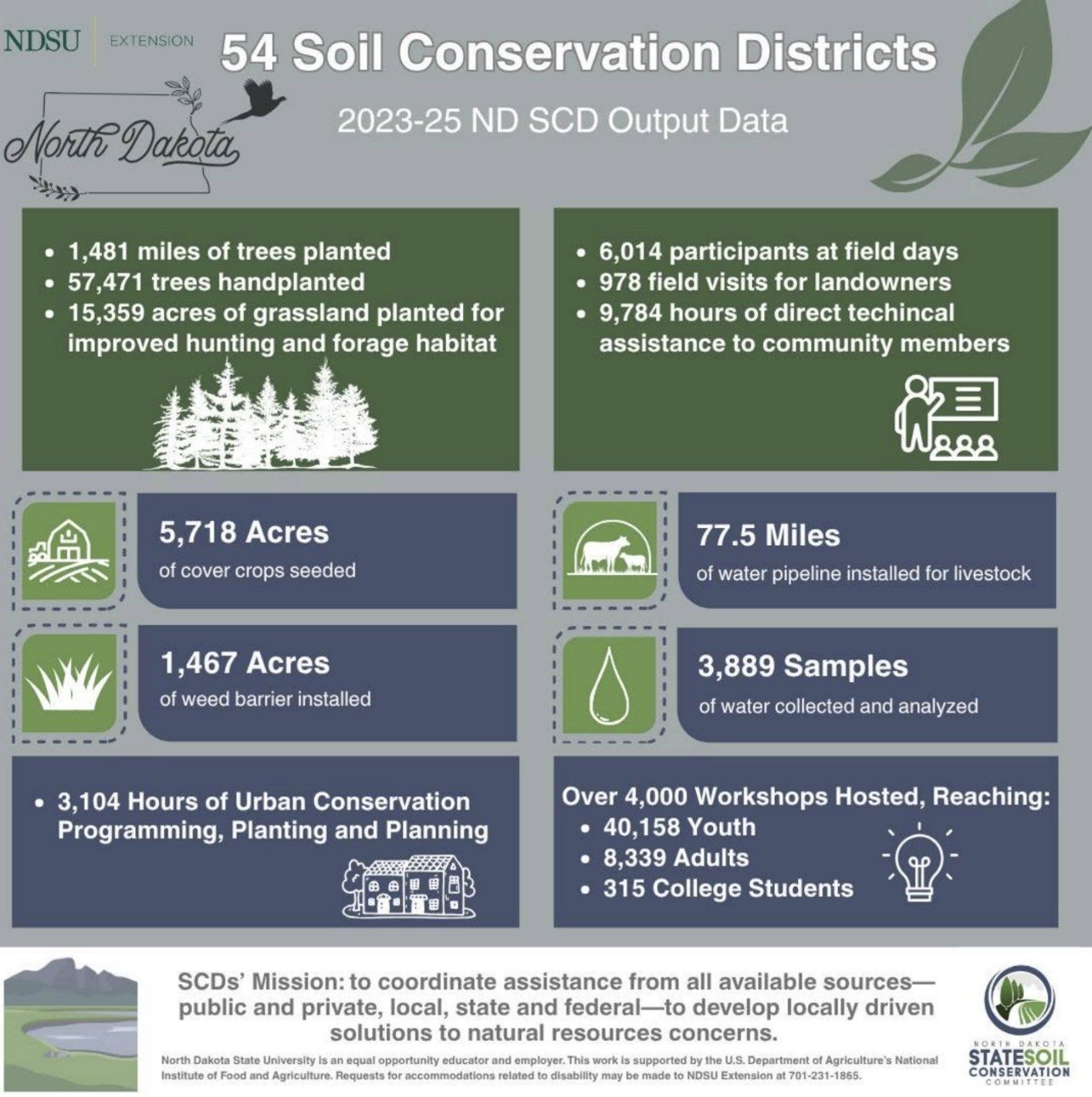
The work of North Dakota’s Soil Conservation Districts continues to play an important role in supporting the long-term health, productivity, and sustainability of communities across the state. Established to promote responsible stewardship of natural resources, local conservation districts work directly with landowners, producers, communities, and partner organizations to address challenges related to soil health, water quality, erosion control, grazing management, and conservation education.
Across rural and urban areas alike, Soil Conservation Districts provide technical assistance, educational programming, and conservation planning that help protect North Dakota’s valuable natural resources while supporting agricultural productivity and economic resilience. District staff and supervisors collaborate with federal, state, and local partners on projects ranging from tree planting and watershed protection to drought mitigation, habitat improvement, and soil health initiatives.
In addition to supporting producers, conservation districts often play an important community role through youth education programs, local workshops, and public outreach efforts that encourage environmental stewardship for future generations. Many districts also assist with grant opportunities and conservation cost-share programs that help landowners implement sustainable practices on working lands. North Dakota Century Code also recognizes the importance of Soil Conservation Districts in regional development efforts by including Soil Conservation District representatives as members of regional council boards. Their inclusion helps ensure that natural resource conservation, land stewardship, and rural sustainability remain part of broader community and economic development discussions throughout the state.
The work of Soil Conservation Districts remains an important part of strengthening both natural resources and rural communities. Their local leadership, partnerships, and hands-on conservation efforts help ensure North Dakota’s land and water resources remain productive and resilient for generations to come.